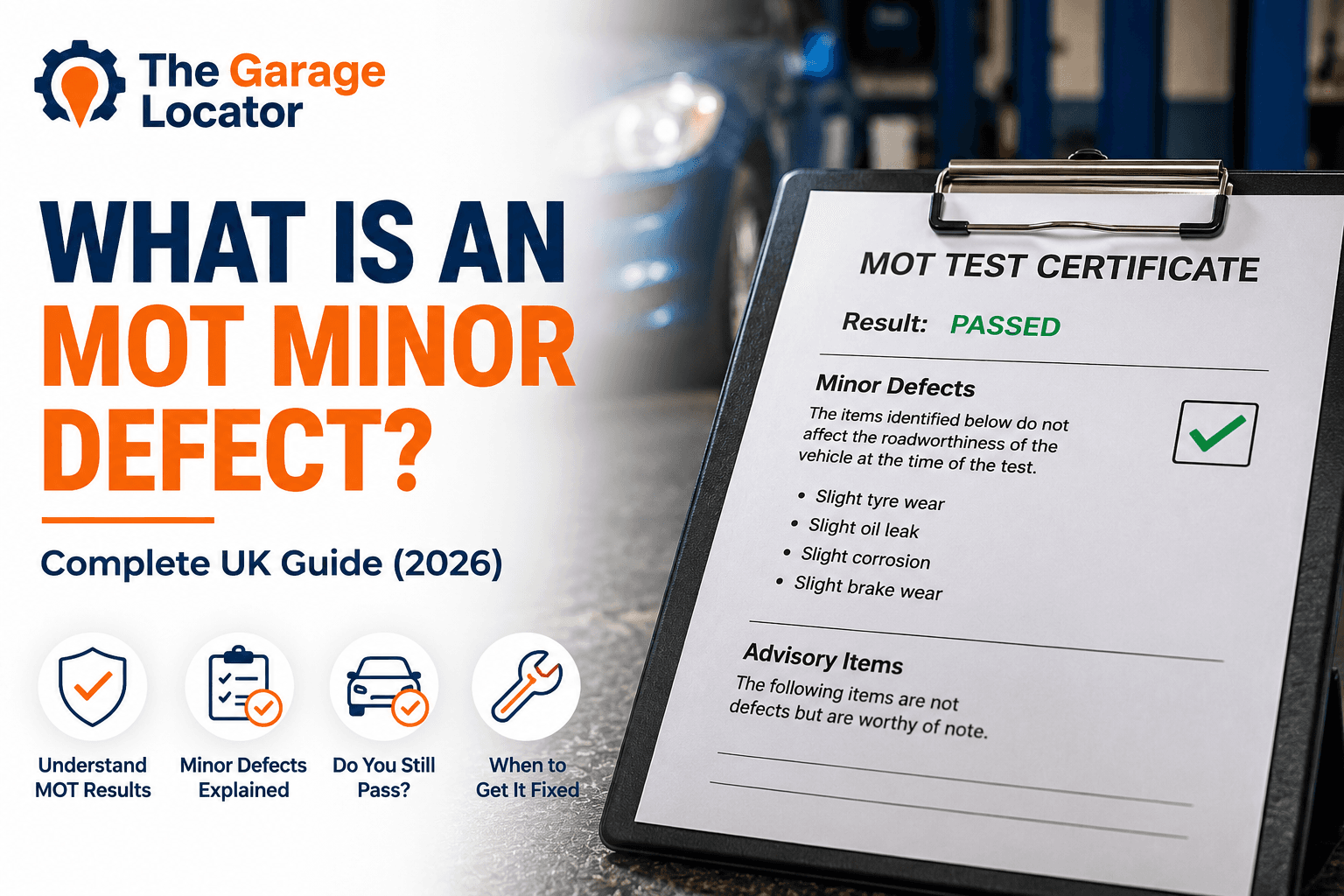
Many drivers are surprised to see a Minor Defect listed on their MOT certificate after their vehicle has passed its test.
Although your car has still passed the MOT, minor defects shouldn't simply be ignored. They can develop into more serious problems that may lead to future MOT failures or expensive repairs.
What Is a Minor Defect?
A minor defect is a problem that does not significantly affect the safety of the vehicle or have a major impact on the environment.
The vehicle still passes its MOT. Unlike MOT advisories, however, a minor defect is a formal MOT defect classification.
However, the defect has been identified by the tester because it should be repaired before it becomes worse.
Examples of Minor Defects
Common examples include:
- Slight tyre wear
- Small oil leaks
- Windscreen chips outside the driver's line of sight
- Minor corrosion
- Slight brake wear
- Worn suspension bushes
- Damaged number plates
- Minor exhaust deterioration
Each defect is assessed individually by the MOT tester.
Do Minor Defects Mean Your Car Failed?
No.
Your vehicle receives a Pass certificate.
Minor defects simply highlight issues that should be repaired before they become more serious.
If your vehicle has a Major or Dangerous defect, it will fail the MOT. You can learn more in our guide on What Happens If Your Car Fails Its MOT?.
Minor Defects vs Advisories
Many drivers still refer to minor defects as advisories.
Since the MOT testing changes introduced in 2018, defects are classified as:
- Dangerous
- Major
- Minor
Vehicles can also receive advisory items, which are observations made by the tester about parts that may need attention in the future.
Read our full guide: What Are MOT Advisories?
Should You Repair Minor Defects?
Yes.
Although your vehicle has passed its MOT, repairing minor defects early can:
- Prevent expensive repairs later
- Improve vehicle safety
- Reduce the risk of future MOT failures
- Help maintain your vehicle's value
Many of the UK's most common MOT failures start as relatively small issues. You can see the most frequent reasons in our article on Top 10 Reasons Cars Fail Their MOT.
Can You Drive With Minor Defects?
Yes.
Because your vehicle has passed its MOT, you can legally continue driving.
However, if the condition worsens and the vehicle becomes unsafe, you should have it repaired immediately.
If you're unsure about advisory notices, read our guide: Can You Drive With an MOT Advisory?.
How to Check Previous Minor Defects
If you're buying a used car, checking previous MOT records is one of the easiest ways to identify recurring problems.
Our free MOT History Checker allows you to:
- View every previous MOT
- See advisories and minor defects
- Check recorded mileage
- Spot repeat issues
- Make a more informed buying decision
👉 Check your vehicle for free: MOT History Checker
Frequently Asked Questions
Are minor defects the same as advisories?
No.
Minor defects are official MOT defect classifications, while advisories are recommendations highlighting components that may require attention in the future.
Do minor defects affect insurance?
Normally no. However, knowingly driving a vehicle with a defect that later becomes dangerous could create problems if it contributes to an accident.
Will a minor defect become a major defect?
Often, yes.
If left unrepaired, many minor defects deteriorate over time and may become major defects at a future MOT.
Final Thoughts
A minor defect isn't an immediate cause for concern, but it shouldn't be ignored.
Fixing problems while they're still minor is usually cheaper, improves safety and increases the likelihood of passing your next MOT without unexpected repair bills.
Before buying any used vehicle, it's always worth checking its MOT history to see whether the same defects keep appearing. You can do that instantly with our free MOT History Checker.