Affiliate disclosure: As an Amazon Associate I earn from qualifying purchases.
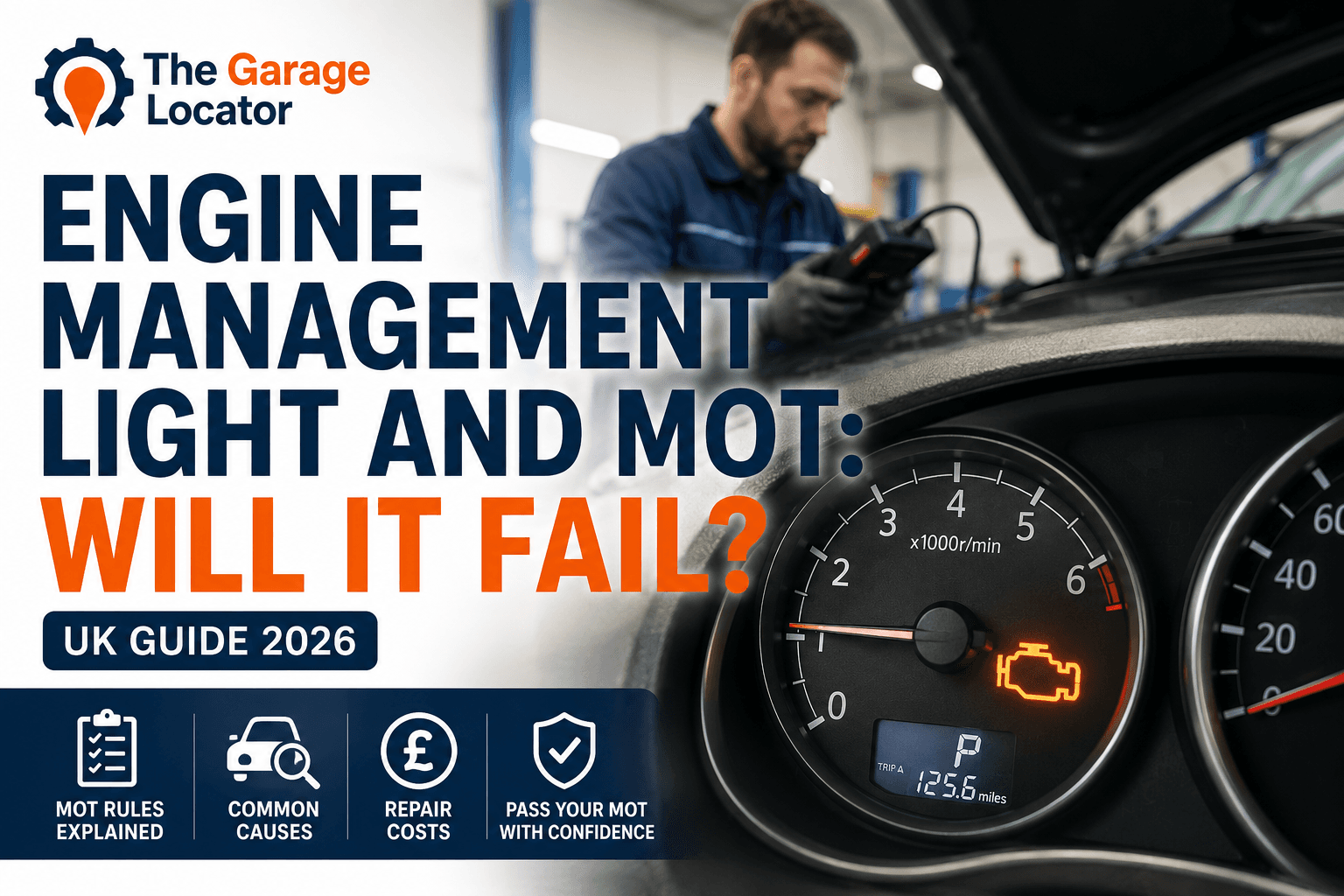
Yes, an illuminated engine management light will usually cause your vehicle to fail its MOT if it indicates an emissions-related fault. During the MOT test, the Malfunction Indicator Lamp (MIL) must illuminate when the ignition is switched on and then go out after the engine starts. If it remains illuminated, the vehicle will normally receive a Major Defect and fail the MOT.
Seeing your engine management light appear just before an MOT can be frustrating. Whether your vehicle passes depends on why the warning light is on and whether it's linked to the emissions control system. In this guide, we'll explain the current UK MOT rules, common causes of the warning light, typical repair costs and what you should do before booking your MOT.
Quick Tip: If your engine management light comes on before your MOT, have the fault diagnosed before the test. Fixing the issue first could save you the cost and inconvenience of an MOT retest.
Will an Engine Management Light Fail an MOT?
In many cases, yes.
If your engine management light remains illuminated because of an emissions-related fault, your vehicle will usually fail its MOT.
Modern petrol and diesel vehicles use sophisticated engine management systems to monitor emissions. If the system detects a fault that could cause emissions to exceed legal limits, it will illuminate the Malfunction Indicator Lamp (MIL), commonly known as the engine management light.
An illuminated engine management light is normally recorded as a Major Defect, meaning the vehicle will fail its MOT. If you're unsure what happens after a failed test, read our guide on What Happens If Your Car Fails Its MOT?.
What Does the MOT Tester Check?
During the MOT inspection, the tester checks that the engine management light behaves correctly.
They will check that:
- The engine management light illuminates when the ignition is switched on.
- The warning light goes out shortly after the engine starts.
- No emissions-related warning lights remain illuminated while the engine is running.
The MOT tester does not diagnose the fault itself. They simply confirm whether the warning light indicates an active emissions-related problem.
Common Reasons the Engine Management Light Comes On
The engine management light can appear for hundreds of different reasons, ranging from very minor faults to expensive repairs.
Some of the most common causes include:
- Faulty oxygen sensor
- Loose or damaged fuel cap
- Mass Air Flow (MAF) sensor failure
- EGR valve faults
- Diesel Particulate Filter (DPF) blockage
- Ignition coil failure
- Worn spark plugs
- Injector problems
- Catalytic converter failure
- Engine timing faults
Some issues may cost less than £100 to repair, while others could cost well over £1,000 if major components require replacement.
Can You Check the Fault Code Yourself?
A basic OBD2 code reader can help identify the engine fault code that triggered the warning light. It will not diagnose or repair every problem, and you should check that it is compatible with your vehicle, but it can provide a useful starting point before visiting a garage.
View the MOTOPOWER OBD2 engine fault-code reader on Amazon (Amazon affiliate link)
Engine management faults are one of the many reasons vehicles fail every year. See our guide to the Top 10 Reasons Cars Fail Their MOT.
Can You Drive With the Engine Management Light On?
Sometimes.
If the engine management light is steady and your vehicle drives normally, it may be safe to drive for a short period while arranging repairs.
However, if the light is flashing, this usually indicates a serious engine misfire that could damage the catalytic converter. In this situation, you should stop driving as soon as it is safe to do so and seek professional advice.
Ignoring the warning light can often turn a relatively inexpensive repair into a much larger bill.
Will Every Warning Light Cause an MOT Failure?
No. Not every dashboard warning light results in an MOT failure. Some warning lights relate to safety systems, while others simply provide information to the driver.
Here are some common examples:
- Engine Management Light – Usually causes an MOT failure if it indicates an emissions-related fault.
- ABS Warning Light – Will normally result in an MOT failure.
- Airbag Warning Light – Will normally result in an MOT failure.
- Electronic Power Steering Warning Light – Can result in an MOT failure if it affects the steering system.
- Low Fuel Warning Light – Does not cause an MOT failure.
- Washer Fluid Warning Light – Does not cause an MOT failure.
- Seat Belt Reminder – Usually does not cause an MOT failure.
Always refer to your vehicle owner's handbook if you're unsure what a warning light means.
Can You Fail an MOT if the Engine Management Light Was Recently Reset?
Some drivers clear the engine management light immediately before an MOT in the hope of passing the test.
While the warning light may temporarily disappear, this does not fix the underlying fault.
After fault codes are cleared, the vehicle's onboard diagnostics system must complete a series of self-checks known as readiness monitors. If the original fault still exists, the warning light will usually return once the system detects the problem again.
Simply resetting the warning light without repairing the fault is unlikely to prevent an MOT failure and may only delay the inevitable.
Typical Repair Costs
Repair costs depend entirely on what's causing the warning light.
Typical UK repair costs include:
- Loose fuel cap: £0–£30
- Oxygen sensor replacement: £150–£350
- Mass Air Flow (MAF) sensor: £120–£300
- Spark plugs: £80–£200
- Ignition coil: £100–£350
- EGR valve repair: £250–£600
- DPF cleaning: £200–£500
- Catalytic converter replacement: £500–£1,500+
These figures are average estimates and may vary depending on your vehicle's make, model and location.
How to Avoid an MOT Failure
Before taking your vehicle for an MOT, it's worth carrying out a few simple checks.
- Start the engine and check for warning lights.
- If the engine management light stays on, arrange a diagnostic scan.
- Repair the underlying fault before booking the MOT.
- Avoid simply clearing fault codes without fixing the issue.
- After repairs, drive the vehicle normally so the onboard diagnostic system can complete its readiness checks.
Taking these steps can improve your chances of passing first time and may save the cost of a retest.
Is It Safe to Buy a Used Car With the Engine Management Light On?
Buying a used car with the engine management light illuminated can be risky.
While the cause may be something relatively inexpensive, it could also indicate costly problems such as a faulty catalytic converter, diesel particulate filter (DPF) or fuel injection system.
Before buying, ask the seller why the warning light is on and request evidence that the fault has been diagnosed or repaired.
It's also worth checking the vehicle's previous MOT history. Repeated emissions failures or recurring advisories can indicate long-term issues that haven't been properly resolved.
You can use our Free MOT History Checker to view official DVSA MOT records, previous failures, advisories and mileage history before deciding whether to buy.
Some engine-related issues may initially appear as advisories before developing into more serious faults. Learn more in What Is an MOT Minor Defect? (Complete UK Guide).
Frequently Asked Questions
Can I pass an MOT with the engine management light on?
Usually not. If the warning light indicates an emissions-related fault, your vehicle will normally fail its MOT.
Can I reset the engine management light before my MOT?
You can clear the fault codes, but if the underlying fault hasn't been repaired, the warning light will usually return. Clearing the light alone is not a reliable way to pass an MOT.
Is the engine management light always expensive to fix?
No. Some problems, such as a loose fuel cap or faulty sensor, can be relatively inexpensive compared with replacing a catalytic converter or repairing a DPF.
Should I book an MOT if the engine management light is on?
It's generally better to diagnose and repair the fault before your MOT. Doing so improves your chances of passing first time and could save the cost of a retest.
Is the check engine light the same as the engine management light?
Yes. The terms "check engine light" and "engine management light" are often used interchangeably. Both refer to the Malfunction Indicator Lamp (MIL), which monitors your vehicle's engine and emissions systems.
Final Thoughts
An engine management light is one of the most common reasons modern vehicles fail an MOT. While some faults are quick and inexpensive to repair, others can indicate more serious emissions or engine problems that should not be ignored.
If your warning light is illuminated, it's always best to have the fault diagnosed before your MOT rather than hoping the issue will disappear.
If you're buying a used vehicle, don't rely solely on appearances. Checking the MOT history can reveal repeated emissions failures, recurring advisories and other signs that the vehicle hasn't been properly maintained.
Use our Free MOT History Checker to view official DVSA MOT records, mileage history, advisories and previous failures before buying your next used car.