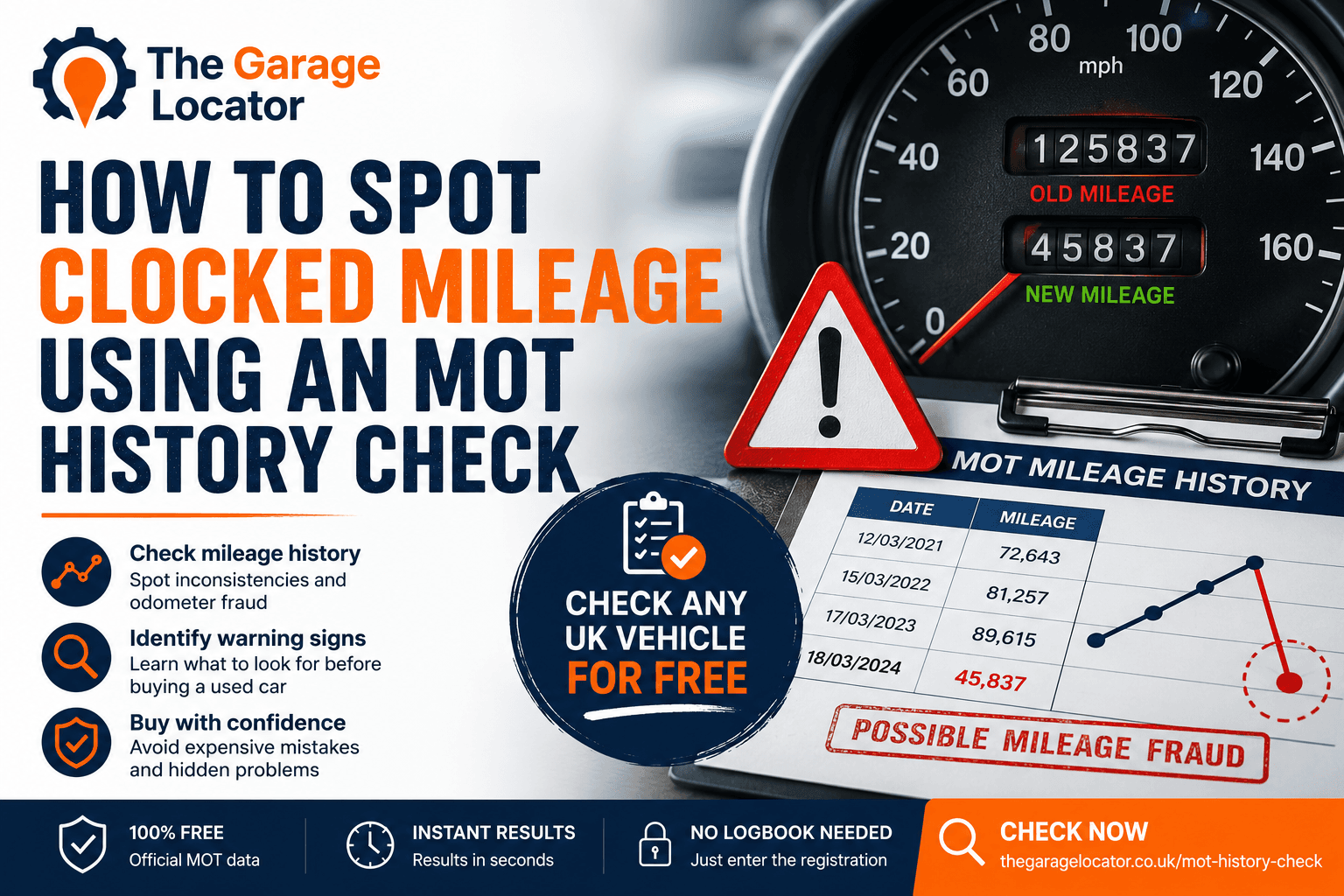
Buying a used car can save you thousands of pounds, but it also comes with risks. One of the biggest concerns for buyers is clocked mileage, where a vehicle's odometer has been altered to show fewer miles than it has actually travelled.
Although mileage fraud is less common than it once was, it still happens. Fortunately, one of the easiest ways to identify potential issues is by checking a vehicle's MOT history.
Use our free MOT History Checker to instantly review a vehicle's recorded mileage, previous MOT results, advisory notices and buyer insights before making a purchase.
What Is Clocked Mileage?
Clocked mileage, also known as odometer fraud, is when a vehicle's mileage is deliberately reduced to make it appear newer and more valuable.
A lower mileage often increases a vehicle's resale value, making it more attractive to potential buyers. Unfortunately, dishonest sellers may attempt to alter the odometer to achieve a higher selling price.
Although modern vehicles are much harder to tamper with than older models, mileage fraud still occurs, making it important to carry out a few simple checks before buying any used car.
Is Mileage Clocking Illegal?
Changing a vehicle's odometer isn't automatically illegal if it's replaced or repaired and the true mileage is accurately recorded.
However, selling a vehicle while deliberately misrepresenting its mileage is illegal and may constitute fraud.
If you suspect a vehicle's mileage has been altered, always ask the seller for supporting documentation and consider walking away if the explanation doesn't seem credible.
How an MOT History Helps
Every MOT test records the vehicle's mileage.
Over time this creates a mileage timeline, making it much easier to identify unusual patterns or inconsistencies.
Our free MOT History Checker displays every recorded MOT mileage in chronological order alongside previous MOT results, advisory notices, Vehicle Health Score and Buyer Value Estimate, helping you make a more informed buying decision.
Warning Signs of Clocked Mileage
The Mileage Goes Backwards
This is the biggest warning sign.
For example:
2022 MOT: 88,450 miles
2023 MOT: 95,210 miles
2024 MOT: 41,350 miles ⚠️
A vehicle cannot legitimately lose mileage between MOT tests.
If you notice the recorded mileage has decreased, ask the seller to explain why before considering the purchase.
Large Mileage Discrepancies
Even if the mileage doesn't reduce dramatically, smaller unexplained differences should still raise questions.
For example:
2022 MOT: 74,800 miles
2023 MOT: 82,100 miles
2024 MOT: 76,900 miles
Occasionally this may be the result of a data entry error during an MOT test, but it's always worth investigating.
Unusually Low Annual Mileage
Most UK vehicles travel between 6,000 and 10,000 miles each year.
If a vehicle suddenly records almost no mileage over several years, ask the seller why.
There may be a genuine explanation, such as long-term storage, but it's something that deserves further investigation.
Excessive Wear for the Recorded Mileage
Compare the vehicle's condition with its claimed mileage.
Warning signs include:
- A heavily worn steering wheel
- Worn or polished pedals
- A shiny gear knob
- Sagging driver's seat
- Excessive wear on switches and controls
A vehicle showing only 25,000 miles would not normally display significant interior wear.
Service History Doesn't Match
The service history should broadly match the MOT mileage.
Compare service invoices, maintenance records and previous MOT certificates.
If these documents show significantly different mileages, ask the seller for an explanation.
Our Vehicle Health Score Makes Buying Easier
Checking mileage is only one part of buying a used car.
Our free MOT History Checker also provides additional insights to help you assess the overall condition of a vehicle, including:
- Vehicle Health Score
- Buyer Value Estimate
- Estimated repair costs
- Suggested negotiation range
- Previous MOT failures
- Advisory history
- Mileage timeline
Instead of reading years of MOT records yourself, these tools help you quickly identify vehicles that deserve a closer inspection.
Does an MOT History Always Prove Mileage Fraud?
No.
Sometimes an MOT tester simply records the wrong mileage by mistake.
However, repeated inconsistencies or unexplained reductions should never be ignored.
An MOT history cannot prove fraud on its own, but it often provides valuable evidence that something isn't right.
What Should You Do If You Suspect Mileage Fraud?
If something doesn't look right:
- Ask to see the vehicle's service history.
- Compare previous invoices with the MOT mileage.
- Check whether the seller can explain any discrepancies.
- Consider obtaining a comprehensive vehicle history report.
- Walk away if you're not completely satisfied.
There are plenty of genuine used cars available, so don't feel pressured into buying one with unanswered questions.
Other Things You Should Check Before Buying
Mileage is only one part of a vehicle's history.
You should also review:
- Previous MOT failures
- Advisory notices
- Recurring defects
- Corrosion history
- Brake advisories
- Suspension wear
- Tyre condition
Our free MOT History Checker brings all of this information together in one easy-to-read report.
For more buying advice, you may also find these guides helpful:
- What Makes a Good MOT History When Buying a Used Car?
- 10 MOT History Red Flags That Should Make You Walk Away From a Used Car
- How to Check a Car's MOT History for Free
- What Are MOT Advisories?
- How Much Does an MOT History Check Cost?
Frequently Asked Questions
Can MOT mileage records be wrong?
Yes. Human error during an MOT test can occasionally result in an incorrect mileage being recorded. However, repeated discrepancies should always be investigated.
How common is mileage fraud?
Mileage fraud is far less common than it was years ago, but it still happens. Checking the MOT history remains one of the easiest ways to identify potential problems before buying.
Can mileage be corrected?
Yes. If an incorrect mileage was recorded during an MOT test, it may be corrected if sufficient evidence is available.
Is checking the MOT history enough?
An MOT history is an excellent starting point, but buyers should also inspect the vehicle, review the service history and obtain a comprehensive vehicle history report if necessary.
Checking a vehicle's MOT history takes less than a minute and could save you from buying a car with hidden problems.
Our free MOT History Checker lets you instantly view:
- Previous MOT passes and failures
- Advisory notices
- Mileage history
- MOT expiry date
- Vehicle Health Score
- Buyer Value Estimate
- Estimated repair costs
- Suggested negotiation range
Whether you're buying your first car or upgrading to your next one, checking the MOT history should always be one of the first things you do.
Start your free MOT History Check today.