26 June 2026
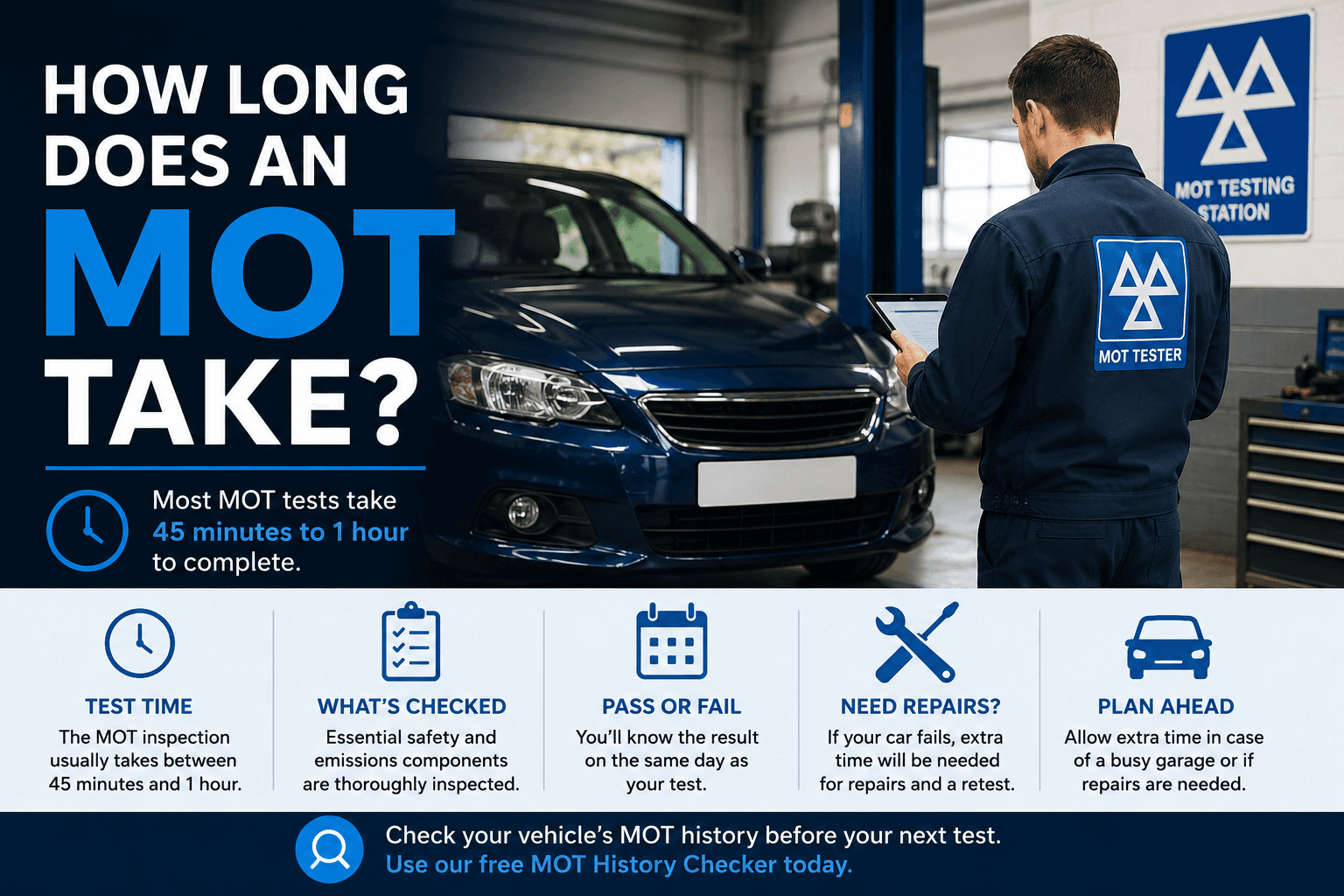
Most MOT tests take between 45 minutes and one hour to complete. However, the total time you'll spend at the garage can vary depending on how busy they are, whether your vehicle passes the test, and if any repairs are needed.
Understanding how long an MOT takes can help you plan your day and avoid unnecessary delays.
Before attending your test, it's also worth checking your vehicle's previous MOT history. You can use our free MOT History Checker to view previous MOT results, advisories, mileage records and failures.
How Long Does the MOT Test Itself Take?
For most cars, the inspection takes approximately:
- 45 to 60 minutes for a standard passenger vehicle.
- Slightly longer for larger vehicles or if additional checks are required.
The MOT follows a fixed inspection carried out by an authorised tester. They examine a range of safety and environmental items but do not dismantle the vehicle.
Why Might It Take Longer?
Several factors can increase the amount of time your vehicle stays at the garage:
- The garage has a busy schedule.
- Your vehicle requires further investigation.
- Minor repairs are carried out immediately.
- Replacement parts need to be ordered.
- The vehicle fails its MOT and requires repairs before a retest.
Some garages offer while-you-wait appointments, while others may ask you to leave the vehicle for several hours.
What Does an MOT Include?
During the inspection, the tester checks many safety-critical components, including:
- Lights and indicators
- Brakes
- Tyres and wheels
- Steering and suspension
- Windscreen and wipers
- Mirrors
- Seatbelts
- Exhaust emissions
- Vehicle structure
For a more detailed breakdown, read our MOT Test Checklist.
What Happens If Your Car Passes?
If your vehicle meets the required standards, you'll receive a pass certificate.
You may still receive advisory notices, highlighting parts that are worn or likely to need attention before your next MOT.
Learn more in our guide:
What Are MOT Advisories? A Complete Guide
What Happens If Your Car Fails?
If your vehicle fails, you'll receive a list of defects explaining why.
Depending on the severity of the faults:
- Minor defects won't cause a failure.
- Major defects result in an MOT failure.
- Dangerous defects mean the vehicle should not be driven until repaired.
Read our full guide:
What Happens If Your Car Fails Its MOT?
How Can You Speed Up Your MOT?
A few simple checks before your appointment can reduce the chance of failure:
- Check all lights are working.
- Ensure tyres have sufficient tread.
- Top up screen wash.
- Replace worn wiper blades.
- Make sure the registration plates are clean and readable.
Our MOT Test Checklist explains everything you should inspect before taking your vehicle for testing.
Check Your MOT History Before Booking
Previous MOT failures and advisories can highlight recurring problems that may still need attention.
Before booking your next MOT—or buying a used vehicle—use our free MOT History Checker to view:
- Previous MOT results
- Advisory notices
- MOT failures
- Mileage history
- Vehicle information
Knowing your vehicle's history can help you prepare for your next MOT and avoid unexpected repair costs.
Frequently Asked Questions
Can an MOT take less than 30 minutes?
Usually not. Most MOT inspections take at least 45 minutes because every required safety check must be completed.
Can I wait while my MOT is carried out?
Many garages allow customers to wait on-site, although this depends on available space and appointment scheduling.
What if my car fails?
The garage will provide a list of defects that need to be repaired before the vehicle can pass its MOT.
Does an MOT include servicing?
No. An MOT checks whether your vehicle meets the legal minimum safety and environmental standards. A service is separate and involves maintenance such as changing oil, filters and inspecting wear items.
Final Thoughts
Most MOT tests are completed within an hour, but it's sensible to allow extra time in case repairs are required or the garage is particularly busy.
Checking your vehicle's previous MOT history before your appointment can also help you identify recurring advisories and prepare for any likely repairs.
Use our free MOT History Checker to instantly view any UK vehicle's MOT history, advisories, mileage records and previous failures.