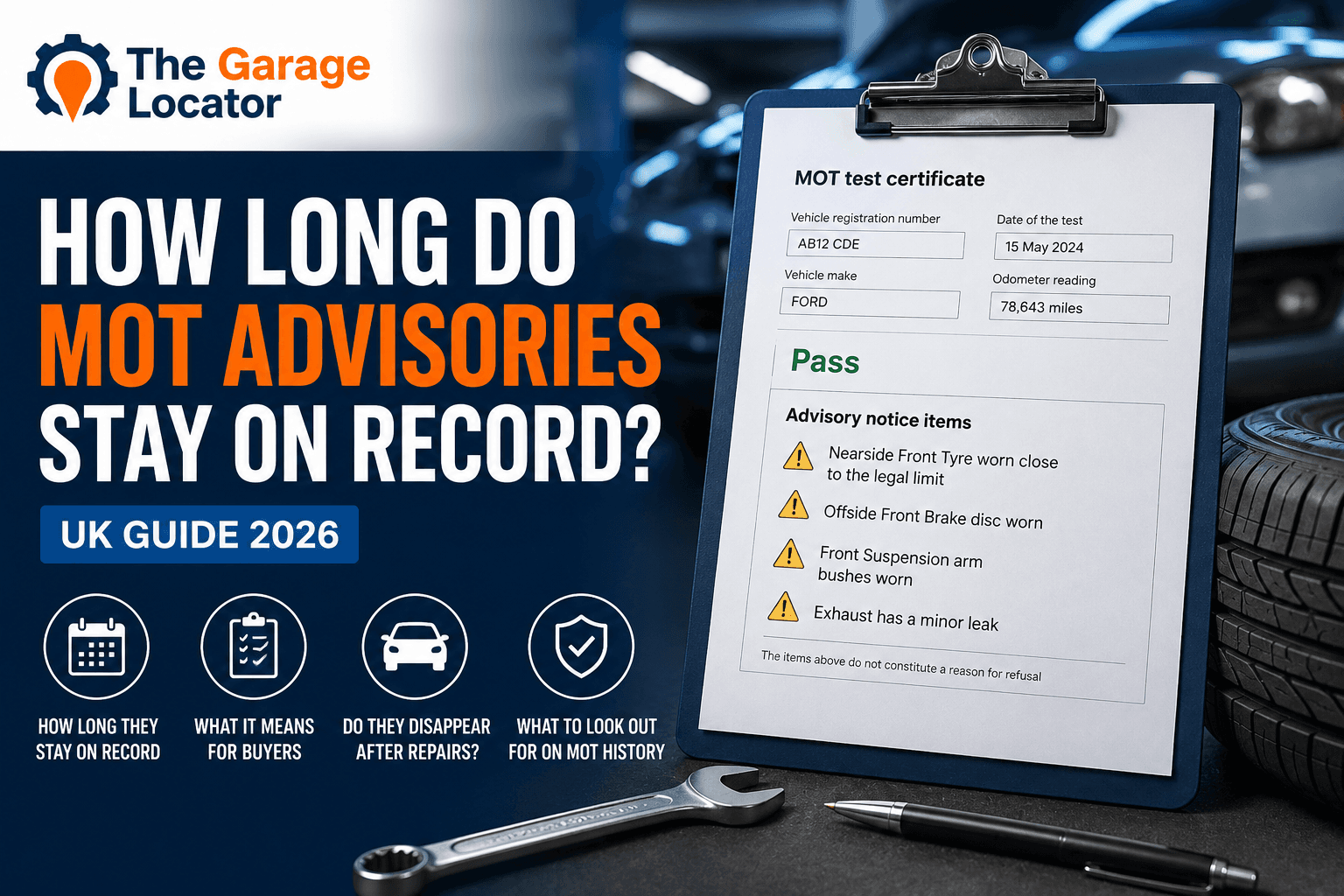
If your car receives an MOT advisory, you may wonder whether it disappears after you repair the issue or whether it stays on your vehicle's history forever. The answer is simple: an MOT advisory remains permanently on the vehicle's official MOT history, even if the problem is repaired immediately afterwards. Understanding how advisories work can help you maintain your vehicle and make better decisions when buying a used car.
What Is an MOT Advisory?
An MOT advisory is issued when your vehicle passes its MOT test, but the tester identifies an item that may need attention in the future. Advisories don't cause the vehicle to fail, but they shouldn't be ignored. Common examples include worn tyres, brake discs showing wear, deteriorating suspension components, minor corrosion, small oil leaks and worn bushes or ball joints. For a detailed explanation, read our guide to what MOT advisories mean.
Do MOT Advisories Ever Disappear?
No. Once an advisory has been recorded during an MOT test, it becomes part of the vehicle's permanent MOT history. Even if the problem is repaired the following day, the advisory from that particular test will remain visible. However, a later MOT test can provide evidence that the issue has been resolved if the same advisory does not appear again.
How Can Buyers Tell If an Advisory Was Fixed?
The best approach is to compare several years of MOT history rather than looking at one test in isolation. For example, if a 2024 MOT includes an advisory stating that a front tyre is worn close to the legal limit, but the 2025 test contains no tyre advisory, this usually suggests the tyre was replaced. By contrast, the same advisory appearing repeatedly may indicate that the owner has continued to ignore the issue. You can review previous tests using our free MOT History Checker.
Are Old Advisories Something to Worry About?
Not always. A vehicle with one or two historic advisories that never appear again may show that the owner dealt with problems when they arose. More concerning patterns include the same advisory appearing year after year, several brake or suspension warnings accumulating, corrosion becoming progressively worse or an advisory eventually developing into a major MOT failure. Our guide to buying a used car with MOT advisories explains how to assess the risk.
What Happens When the Same Advisory Keeps Appearing?
A recurring advisory deserves closer attention because it may show that the component has not been repaired or replaced. Some owners delay repairs because an advisory does not immediately make the vehicle illegal to drive. However, components such as tyres, brakes, suspension parts and corroded structures can continue to deteriorate. An advisory that appears harmless on one test may become a major or dangerous defect at the next MOT.
Can You Remove an MOT Advisory?
No. A vehicle owner or MOT testing garage cannot remove a legitimate advisory from the official MOT record. The advisory remains attached to the test on which it was recorded. A record would normally only be amended if an administrative or data-entry error were formally corrected.
Does Repairing the Problem Update the MOT History?
Repairing the fault does not alter the original MOT record. The garage carrying out the repair may provide an invoice or receipt, but the historic advisory will remain visible. The strongest evidence that an issue has been fixed is a repair invoice combined with later MOT tests that no longer mention the same component.
Should Historic Advisories Stop You Buying a Car?
Usually not. You should judge the complete history rather than rejecting a vehicle because of one old advisory. A car with occasional advisories that are resolved before the next test may be better maintained than a vehicle with repeated warnings, frequent failures or long gaps between MOT tests. You can learn more about assessing a vehicle's record in our guide to what makes a good MOT history.
Which MOT Advisories Are Most Serious?
Some advisories are more important than others. Warnings relating to tyres, brakes, steering, suspension, structural corrosion and fluid leaks can develop into expensive or safety-critical problems. Cosmetic issues and minor wear may be less urgent, but every advisory should still be inspected and monitored. Before buying a vehicle, check whether the same safety-related issue has appeared repeatedly or later caused a failure.
Can You Drive With an MOT Advisory?
In many cases, yes. An advisory means the vehicle passed its MOT at the time of testing. However, an MOT certificate only confirms that the car met the required standards during the test. The vehicle must remain roadworthy throughout the year. A tyre, brake or suspension component can deteriorate after the MOT and become unsafe or illegal before the next test is due. Read our guide on driving with an MOT advisory for more information.
How Do MOT Advisories Affect a Car's Value?
A small number of resolved advisories may have little effect on a vehicle's value. Repeated or unresolved advisories can give a buyer stronger grounds to negotiate, particularly when they involve tyres, brakes, suspension or corrosion. Buyers may reduce their offer to account for potential repair costs and uncertainty about how well the vehicle has been maintained.
What Should You Ask the Seller?
Ask whether the advisory was repaired, when the work was completed and whether there are invoices or receipts. You should also ask why the same issue appears on several tests if it has been recurring. A responsible seller should be able to explain the repair history and provide evidence for significant work.
Check a Vehicle's Full MOT History
Before purchasing a used vehicle, review its previous advisories, MOT failures, mileage readings, dangerous defects, major defects and recurring maintenance problems. Our free MOT History Checker analyses the vehicle's MOT record and helps highlight patterns that may require further investigation.
Frequently Asked Questions
Do MOT advisories stay on record forever?
Yes. An advisory remains permanently attached to the MOT test on which it was recorded.
Does repairing the fault remove the advisory?
No. Repairing the issue does not change the historic test record, although later MOT tests may show that the problem has been resolved.
Can an MOT garage delete an advisory?
No. A garage cannot remove a legitimate advisory simply because the vehicle owner disagrees with it or has completed the repair.
Are historic MOT advisories a bad sign?
Not necessarily. A one-off advisory that disappears from later tests may indicate that the owner repaired the issue promptly.
Should I avoid a vehicle with MOT advisories?
Not automatically. Look at how serious the advisories are, whether they recur and whether the seller can provide evidence of repairs.
How many advisories are too many?
There is no fixed number. The type, severity and repetition of the advisories matter more than the total alone. Read our guide on how many MOT advisories are too many for a more detailed explanation.