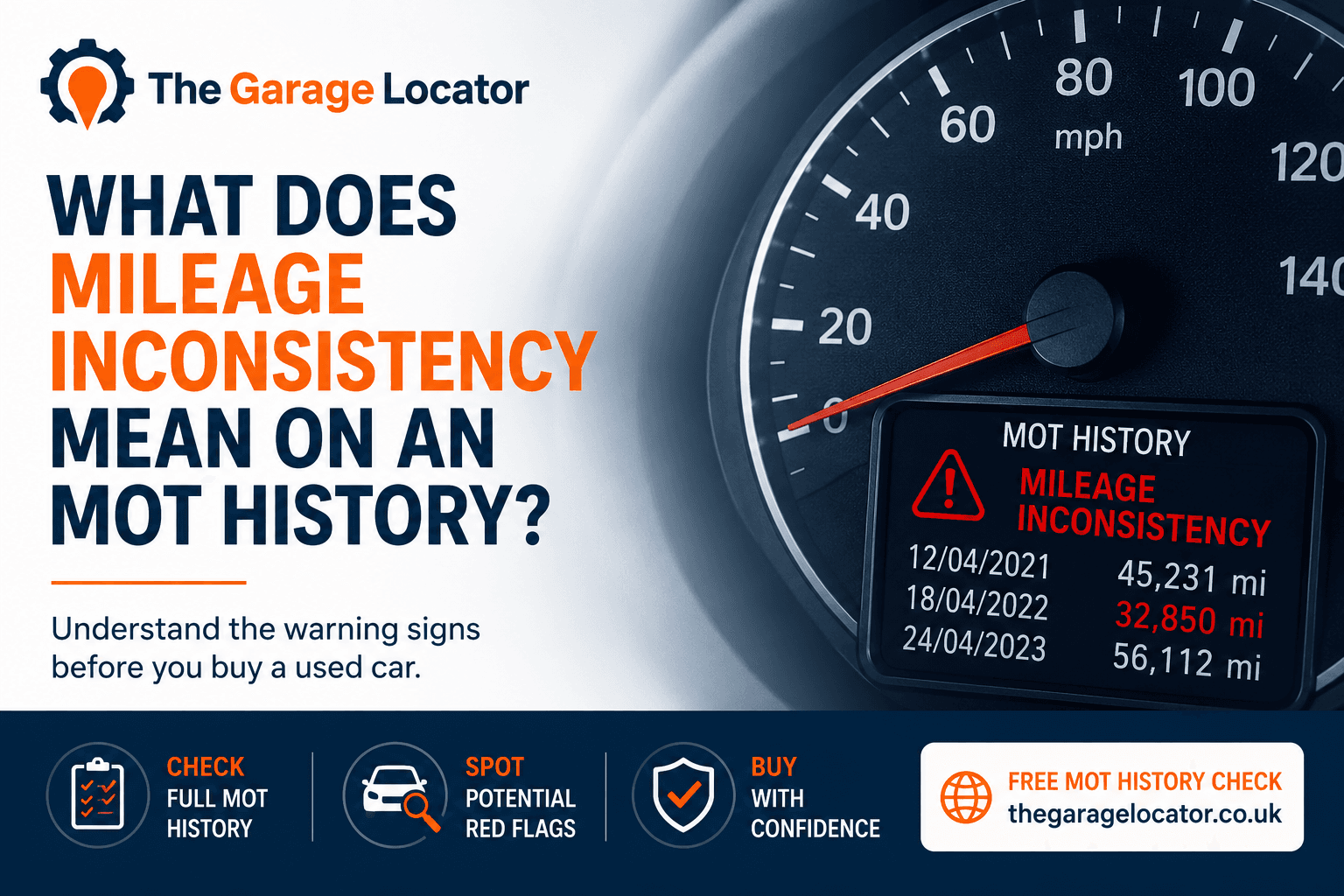
If you've checked a vehicle's MOT history and noticed a mileage inconsistency warning, it's natural to be concerned.
While a mileage discrepancy doesn't always mean someone has tampered with the odometer, it's something that should always be investigated before buying a used vehicle. A free MOT history check can help you review the vehicle's recorded mileage alongside its MOT results and advisory history.
What Is a Mileage Inconsistency?
Every time a vehicle undergoes an MOT test, the tester records its mileage. This creates a historical record that helps buyers understand how far the vehicle has travelled over time.
If a later MOT records fewer miles than an earlier test, or if the increase between tests appears unrealistic, the DVSA may flag the vehicle with a mileage inconsistency. This warning indicates that the recorded mileage does not follow a normal pattern and deserves further investigation.
If you're unfamiliar with checking MOT records, our guide on How to Check a Car's MOT History for Free explains the process step by step.
Common Causes of Mileage Inconsistencies
A mileage inconsistency doesn't automatically mean the vehicle has been "clocked." There are several possible explanations, including:
- A typing error during an MOT test.
- An incorrect mileage entered after replacing the instrument cluster.
- A speedometer replacement that wasn't recorded correctly.
- Odometer tampering (clocking).
- Administrative or recording errors.
Although many discrepancies turn out to be genuine mistakes, they should never be ignored when considering a used car purchase.
Why Mileage Matters
Vehicle mileage affects far more than just the number displayed on the dashboard. It influences:
- The vehicle's market value.
- Expected wear and tear.
- Recommended servicing intervals.
- Buyer confidence.
If a vehicle appears to have travelled significantly fewer miles than it actually has, it may be worth less than the asking price.
How to Investigate a Mileage Discrepancy
Before buying the vehicle, you should:
- Review every recorded MOT mileage.
- Compare the MOT history with the service history.
- Check maintenance invoices for mileage records.
- Ask the seller to explain the discrepancy.
- Look for evidence that the dashboard or instrument cluster has been replaced.
A trustworthy seller should be able to explain any unusual mileage readings and provide supporting documentation where appropriate.
Other Warning Signs to Watch For
Mileage inconsistencies become more concerning if they're accompanied by other issues, such as:
- Long gaps between MOT tests.
- Repeated MOT failures.
- Serious corrosion or structural defects.
- Heavy interior wear that doesn't match the recorded mileage.
- Missing or incomplete service history.
Looking at the vehicle's complete MOT history often provides a much clearer picture than mileage alone. Our article, What Makes a Good MOT History When Buying a Used Car?, explains the signs of a well-maintained vehicle.
Should You Avoid Buying the Vehicle?
Not necessarily.
A small discrepancy caused by a simple recording error may have little impact on the vehicle's condition or value.
However, if the mileage has reduced significantly without a clear explanation, or there are multiple inconsistencies throughout the vehicle's history, you should proceed with caution. If the seller cannot provide a satisfactory explanation, it may be wiser to walk away.
Our guide to 10 MOT History Red Flags That Should Make You Walk Away From a Used Car highlights other warning signs that every buyer should know before making a purchase.
Check the Full MOT History Before You Buy
Mileage is only one part of a vehicle's history. Before purchasing any used car, it's important to review previous MOT failures, advisory notices, recurring defects and recorded mileage to build a complete picture of the vehicle's condition.
You can perform a free MOT history check with The Garage Locator to view a vehicle's MOT history, mileage records, advisory notices and previous test results. Taking a few minutes to review this information could help you avoid expensive surprises and make a more informed buying decision.
Related Guides
If you're researching a used car, you may also find these guides helpful: