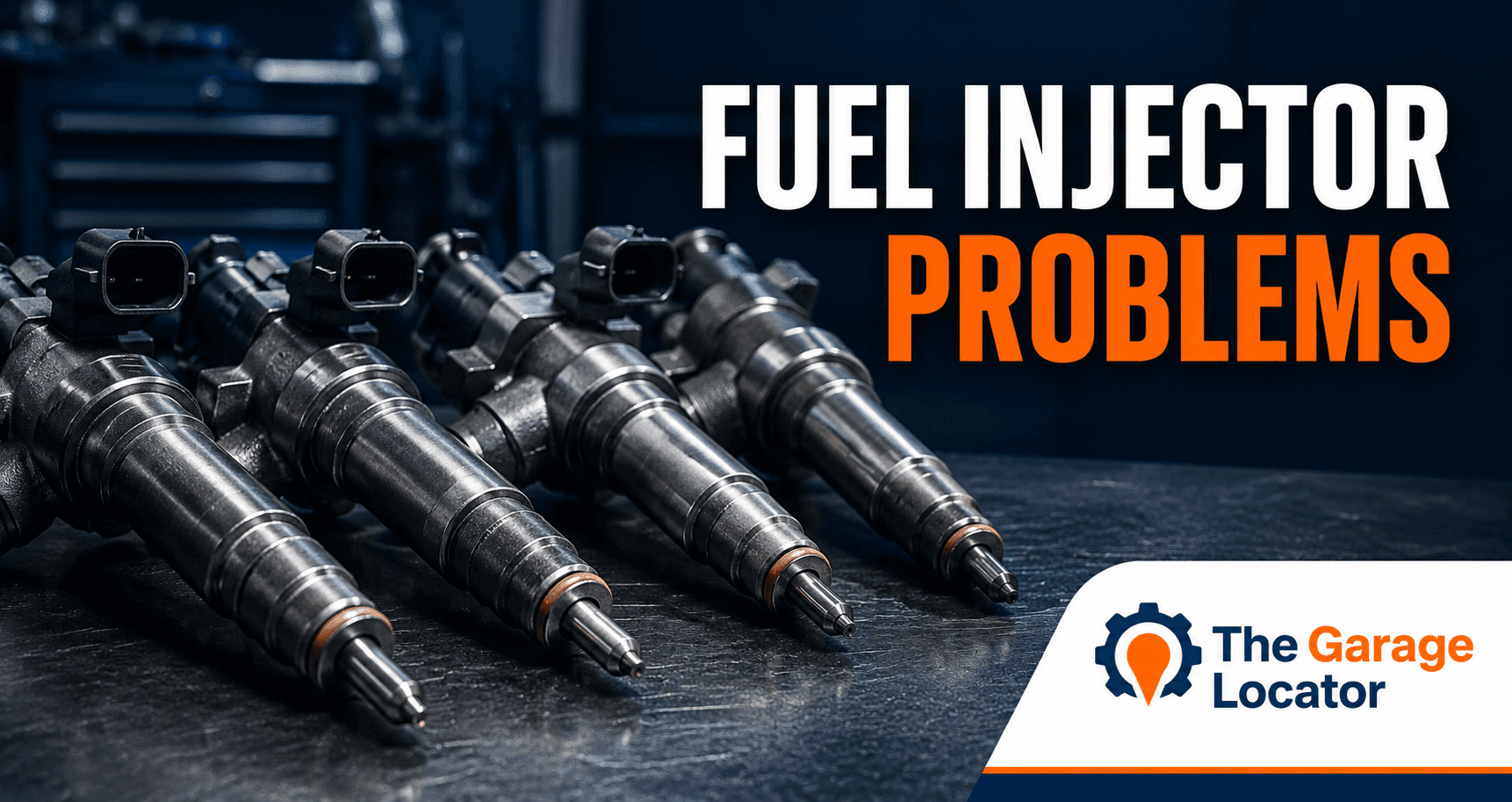
What does the fuel injector do?
Fuel injectors meter and atomise fuel precisely. Their operating pressure and design vary greatly between petrol and diesel engines, and a misfire does not by itself prove that an injector is faulty.
This guide helps you recognise useful clues and ask better questions. It cannot confirm a fault without inspecting and testing the vehicle.
Common fuel injector problem symptoms
Rough idle or misfire
An injector may be delivering too much, too little or poorly atomised fuel, but ignition and compression must also be checked.
Hard starting
Pressure loss, excessive leak-off, electrical faults and many non-injector causes are possible.
Fuel smell or visible leakage
Treat this urgently because escaping fuel creates a fire risk.
Poor economy or black smoke
Over-fuelling, sensor errors, airflow faults or an injector problem may be involved.
Knocking or uneven diesel combustion
Correction values and leak-off testing can help, but must be interpreted correctly.
Symptoms often overlap. Their timing matters: note whether they happen when cold or hot, at idle, during acceleration, while turning, or after recent work.
Common causes
Diagnosis guide
Common Causes
Internal wear or contamination
Electrical winding or wiring failure
Damaged seals or sealing washers
Incorrect fuel pressure
Water or debris in the fuel
Carbon around a diesel injector seat
A failed component may be the result rather than the original cause. Correct diagnosis should identify both what is wrong and why it happened.
Is it safe to continue driving?
⚠️ Important warning
If the vehicle still behaves normally, avoid unnecessary journeys until you understand the fault. Dashboard instructions and vehicle-specific professional advice take priority over general guidance. Never inspect beneath an unsupported vehicle or touch hot, moving or high-voltage components.
What should a garage check?
Ask what evidence confirmed the diagnosis. Replacing the part named in a fault code is not always correct: a code identifies the system or condition detected, not automatically the failed component.
Could it affect the MOT?
Injector faults may cause an emissions failure or warning-lamp issue, but an MOT cannot identify injector condition or confirm which part caused high emissions.
Use the exact wording from the certificate when researching an MOT result. An advisory is different from a minor, major or dangerous defect, and the result records the condition at the time of the test.
What affects the repair quotation?
Vehicle design, access, diagnostic time, seized fittings, required fluids, part quality and related damage can all change the total. Ask whether the price includes diagnosis, parts, labour, VAT, consumables, coding, calibration or alignment where required.
Compare the complete scope rather than just the headline figure. A cheaper quote may exclude work included elsewhere, while an expensive quote should still be supported by a clear diagnosis.
Can the problem be prevented?
Use suitable fuel, replace the fuel filter as specified, avoid running the tank repeatedly very low where the manufacturer advises against it, and investigate water contamination or pressure faults promptly.
No maintenance routine prevents every failure. The practical goal is to reduce avoidable damage and find developing faults before they affect safety or damage connected parts.
If you are buying a used car
Do not rely on a seller's verbal diagnosis or a promise that the repair is cheap. Ask for an independent inspection or written garage findings. Check invoices and the MOT history, while remembering that an MOT is not a complete mechanical inspection.
What to tell the garage
Describe the symptom in your own words, when it began and what makes it better or worse. Bring photographs of stationary warning messages and mention recent repairs, impacts, flat batteries or fluid loss. Do not clear codes immediately before diagnosis.
Useful next steps
Important
This is general UK motorist guidance, not a diagnosis or vehicle-specific repair procedure. A qualified garage must inspect the vehicle before confirming safety, the failed component and the required repair.