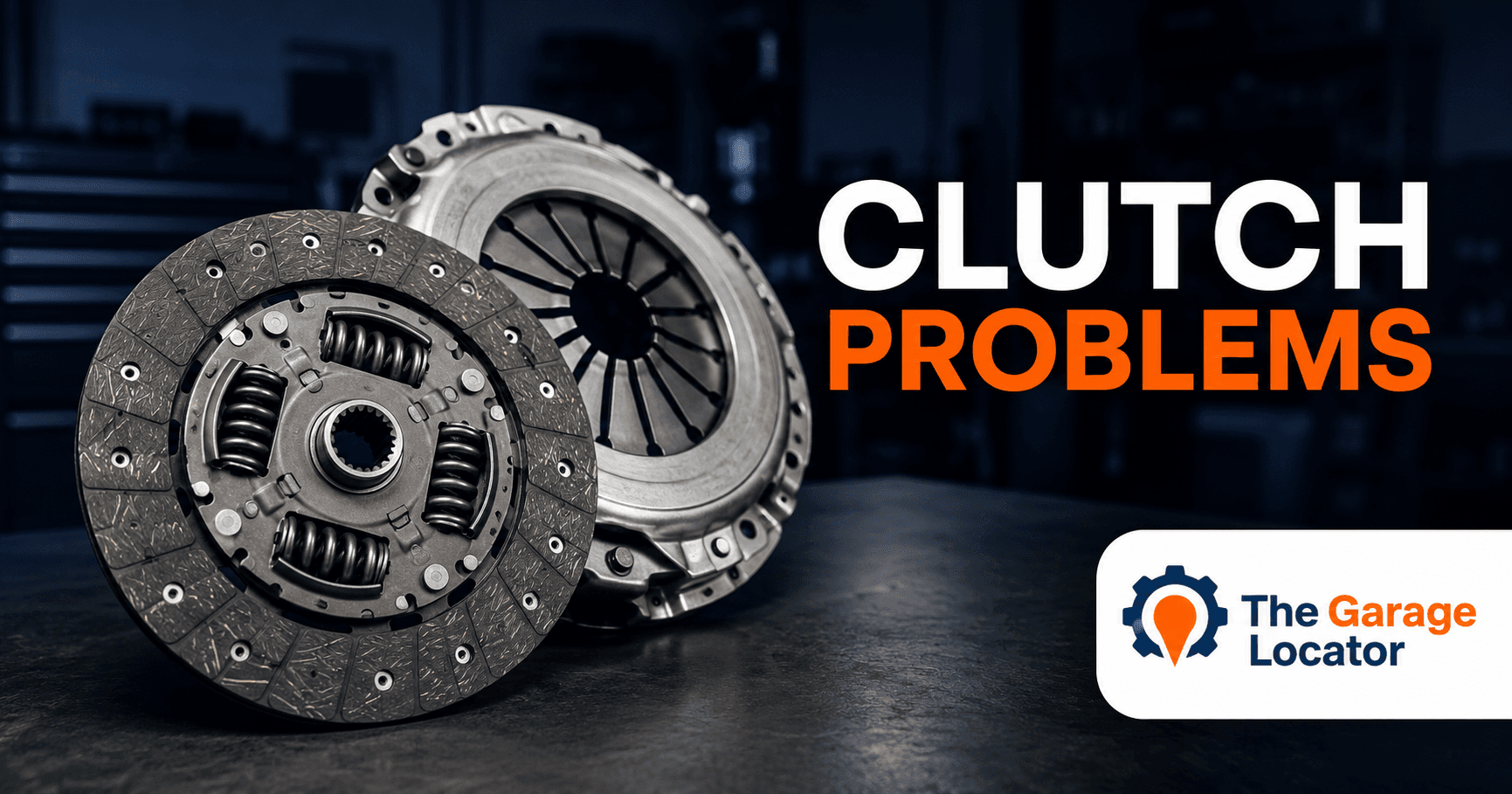
What does the clutch do?
The clutch disconnects the engine from the gearbox so you can pull away, stop and change gear smoothly. Gradual wear is common, but hydraulic, cable, flywheel and gearbox faults can create similar symptoms.
This guide helps you recognise useful clues and ask better questions. It cannot confirm a fault without inspecting and testing the vehicle.
Common clutch problem symptoms
Engine speed rises without matching acceleration
The clutch may be slipping, particularly if this happens in a high gear under load.
Biting point becomes unusually high
Friction material may be nearing the end of its useful life, although adjustment and self-adjusting mechanisms vary.
Judder when moving away
Possible causes include contamination, heat damage, mount movement or flywheel problems.
Gears are difficult to select
The clutch may not be releasing fully, but linkage, hydraulic and gearbox faults must also be considered.
Noise when the pedal is pressed or released
A release bearing, pressure plate, fork, pivot or related component may be worn.
Symptoms often overlap. Their timing matters: note whether they happen when cold or hot, at idle, during acceleration, while turning, or after recent work.
Common causes
Diagnosis guide
Common Causes
Normal friction-material wear
Oil contamination from an engine or gearbox seal
A worn pressure plate or release bearing
Hydraulic master or slave-cylinder trouble
Cable or linkage problems on applicable vehicles
Dual-mass flywheel wear
A failed component may be the result rather than the original cause. Correct diagnosis should identify both what is wrong and why it happened.
Is it safe to continue driving?
⚠️ Important warning
If the vehicle still behaves normally, avoid unnecessary journeys until you understand the fault. Dashboard instructions and vehicle-specific professional advice take priority over general guidance. Never inspect beneath an unsupported vehicle or touch hot, moving or high-voltage components.
What should a garage check?
Ask what evidence confirmed the diagnosis. Replacing the part named in a fault code is not always correct: a code identifies the system or condition detected, not automatically the failed component.
Could it affect the MOT?
The clutch itself is not assessed like brakes or tyres during a routine MOT, but a vehicle that cannot be driven safely or controlled for the test may not be testable. An MOT pass is not evidence of clutch condition.
Use the exact wording from the certificate when researching an MOT result. An advisory is different from a minor, major or dangerous defect, and the result records the condition at the time of the test.
What affects the repair quotation?
Vehicle design, access, diagnostic time, seized fittings, required fluids, part quality and related damage can all change the total. Ask whether the price includes diagnosis, parts, labour, VAT, consumables, coding, calibration or alignment where required.
Compare the complete scope rather than just the headline figure. A cheaper quote may exclude work included elsewhere, while an expensive quote should still be supported by a clear diagnosis.
Can the problem be prevented?
Avoid holding the car on the clutch at junctions or hills, resting a foot on the pedal, and repeated high-load slipping. Repair oil leaks promptly and investigate pedal or gear-selection changes early.
No maintenance routine prevents every failure. The practical goal is to reduce avoidable damage and find developing faults before they affect safety or damage connected parts.
If you are buying a used car
Do not rely on a seller's verbal diagnosis or a promise that the repair is cheap. Ask for an independent inspection or written garage findings. Check invoices and the MOT history, while remembering that an MOT is not a complete mechanical inspection.
What to tell the garage
Describe the symptom in your own words, when it began and what makes it better or worse. Bring photographs of stationary warning messages and mention recent repairs, impacts, flat batteries or fluid loss. Do not clear codes immediately before diagnosis.
Useful next steps
Important
This is general UK motorist guidance, not a diagnosis or vehicle-specific repair procedure. A qualified garage must inspect the vehicle before confirming safety, the failed component and the required repair.